

Flower delivery to Malta – Valletta, Mdina
-
 Argentina
-
 Aruba
-
 Australia
-
 Austria
-
 Bahrain
-
 Belgium
-
 Bosnia & Herzegovina
-
 Brazil
-
 Bulgaria
-
 Canada
-
 Canary Islands
-
 China
-
 Croatia
-
 Cyprus
-
 Czech Republic
-
 Denmark
-
 Dominican Republic
-
 Estonia
-
 Finland
-
 France
-
 Georgia
-
 Germany
-
 Gibraltar
-
 Greece
-
 Holland
-
 Hong Kong
-
 Hungary
-
 Iceland
-
 Indonesia
-
 Ireland
-
 Israel
-
 Italy
-
 Japan
-
 Jordan
-
 Kuwait
-
 Latvia
-
 Liechtenstein
-
 Lithuania
-
 Luxembourg
-
 Macedonia
-
 Malaysia
-
 Maldives
-
 Malta
-
 Mauritius
-
 Mexico
-
 Moldova
-
 Monaco
-
 Montenegro
-
 Morocco
-
 New Zealand
-
 Norway
-
 Oman
-
 Pakistan
-
 Peru
-
 Philippines
-
 Poland
-
 Portugal
-
 Qatar
-
 Romania
-
 San Marino
-
 Saudi Arabia
-
 Serbia
-
 Slovakia
-
 Slovenia
-
 South Africa
-
 South Korea
-
Spain
-
 Sri Lanka
-
 Sweden
-
 Switzerland
-
 Taiwan
-
 Thailand
-
 Tunisia
-
 Turkey
-
 Ukraine
-
 United Arab Emirates
-
 United Kingdom
-
 USA
-
 Zanzibar


When invited for a meal in a Maltese home, guests often bring wine, chocolate or flowers. Since 1971 the national plant of Malta has been the endemic Widnet il-Baħar, which blooms purple from roughly May to July on the limestone cliffs of Malta and Gozo.
In Malta, spring comes into full bloom in March, when red flowering sulla mixes with yellow wood sorrel on the clay steppes. More than 30 species of orchid have been recorded on the Maltese Islands, and they are best seen from February to April.
The San Anton Gardens were founded by Grand Master Antoine de Paule next to his summer palace, and jacarandas, bougainvilleas and roses grow there. Every year they host a large spring horticultural show, a festival of flowers, plants, fruit, vegetables and crafts.
The national tree of Malta is the sandarac tree (Tetraclinis articulata).
A Maltese Christmas tradition is to grow wheat, grain and canary seed in the dark into white shoots, which are used to decorate nativity cribs.
Both 21 September, when Malta gained independence in 1964, and 13 December, when it became a republic in 1974, are public holidays.
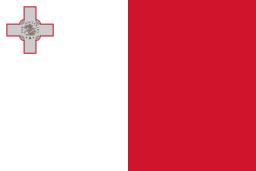
Malta is an archipelago in the central Mediterranean about 80 km from southern Italy, and its permanently inhabited islands are Malta, Gozo and Comino. The capital is Valletta, which has been on the UNESCO World Heritage List since 1980 and whose foundation stone was laid by Grand Master de Valette in 1566. The fortified town of Mdina was the capital from antiquity to the Middle Ages, and locals and visitors call it the "Silent City". The megalithic temples, built roughly between 3600 and 2500 BC, are also on the UNESCO World Heritage List.